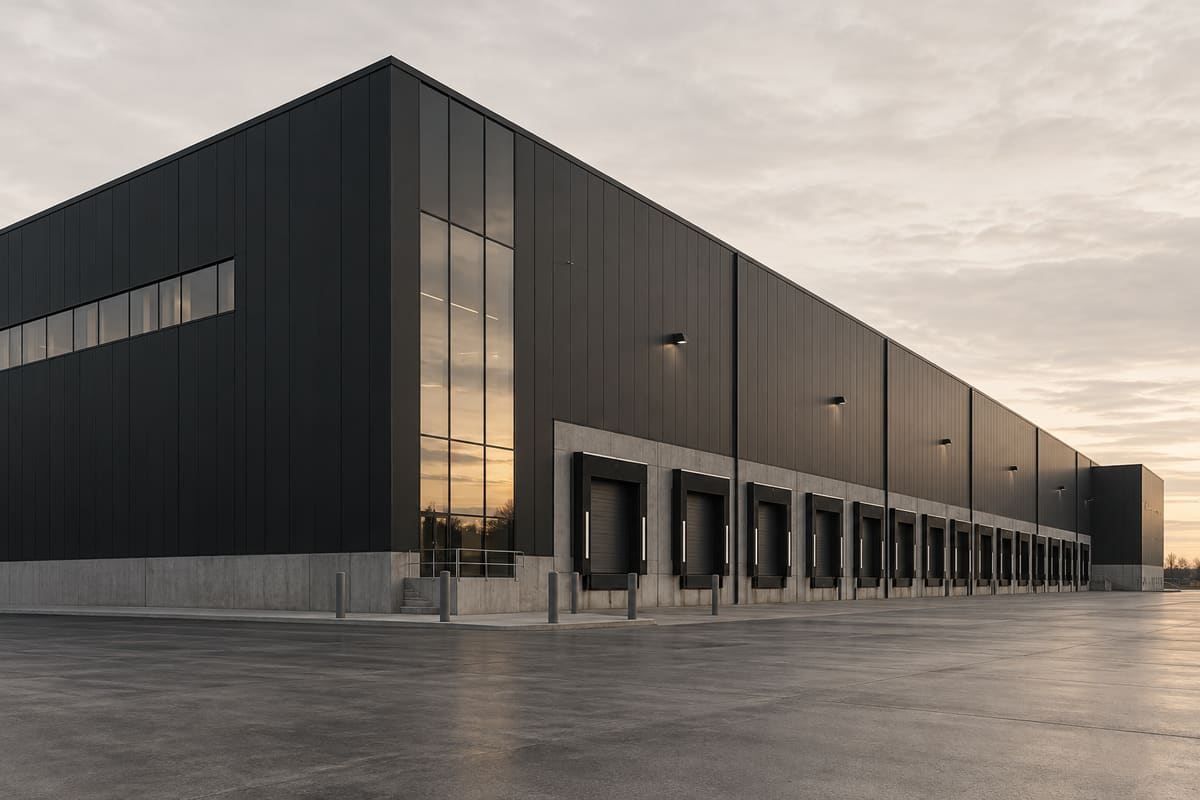
A listing may state a stall count or parking ratio, but that headline does not establish who owns the area, which users have rights, what a municipality approved, whether the layout still exists or how it works during deliveries, winter operations and peak demand. A decision-ready review keeps legal, municipal, physical, contractual and operating evidence separate until the appropriate authority or professional reconciles them.
This is general information, not legal, tax, environmental, engineering, accounting or investment advice. Obtain advice specific to the property and transaction.
1. Define the decision and exact site
Identify every titled parcel, condominium unit, common-property area, leased or licensed area, access point and adjoining parcel used for parking, circulation, loading, waste, drop-off or snow storage. State whether the decision is acquisition, lease, development, financing or marketing.
Do not treat painted lines, historic use or a listing photograph as proof that an area belongs to the property or will remain available.
- Title and parcel
- Condominium plan
- Registered instruments
- Approved site plan
- Current field condition
- Lease or licence
2. Separate five different parking facts
Record separately: the legal property or registered right; the municipal approval and conditions; the stalls physically observed; the spaces allocated by lease, licence or operating policy; and the spaces actually available at the relevant time.
One source rarely proves all five. A survey plan can show where a right applies but Alberta Land Registry explains that a separate registered instrument is required to create or convey the interest.
3. Read title, plans and shared-use instruments
Obtain current title, referenced easements or restrictive covenants, survey and condominium plans, reciprocal-access or shared-parking agreements, leases, licences and amendments. Identify benefiting and burdened lands, users, hours, allocation, maintenance, cost, enforcement, relocation and termination provisions.
A right shown on a plan may be narrower than the operational assumption. Counsel and survey professionals should determine legal effect and location.
4. Verify municipal approval, not a generic ratio
Review the current zoning or land-use framework, approved development plans, permits, conditions, relaxations, parking studies, access approvals and later changes. Calgary has removed minimum motor-vehicle parking requirements for many non-residential uses, while the City still reviews proposed parking and regulates approved parking and loading. Edmonton regulates access, circulation, parking-area design, loading and barrier-free spaces under its current bylaw.
Do not apply one city, district, use or approval date to another property. The applicable authority and address-specific record control.
5. Test physical and seasonal operation
Observe stall markings, dimensions, obstructions, grades, drainage, lighting, security, gates, clearance, turning, pedestrian conflicts and surface condition. Map snow clearing and storage, winter line visibility, drainage freeze-up and the loss of usable spaces during maintenance.
An observed count is a dated field record, not a compliance certificate. Preserve photographs and the site-plan version rather than silently changing the marketed count.
6. Keep accessibility connected to the complete route
Index accessible parking, access aisles, signage, curb transitions, lighting and the path to the relevant entrance. Alberta's Accessibility Design Guide connects parking with a barrier-free path of travel; Edmonton also ties barrier-free spaces to applicable building-code requirements.
Do not publish a technical compliance conclusion from a visual review. Building-code requirements and human-rights accommodation obligations are related but distinct workstreams.
7. Model loading, service and emergency conflicts
Trace delivery vehicles from the street through gates and manoeuvring areas to loading doors. Record vehicle type, hours, queuing, dock or grade access, waste collection, fire routes, pickup and drop-off, tenant conflicts and snow operations.
A loading door does not prove a lawful or usable loading route. Calgary requires approved parking and loading stalls to remain available for their approved purpose; Edmonton includes loading areas in its circulation and parking design framework.
8. Verify EV and electrical claims
For every charger, record ownership, user rights, stall control, power source, electrical capacity, network or billing arrangement, maintenance, accessibility, operating status and expansion evidence. Keep installed, energized, commissioned, networked and available-for-use statuses separate.
A visible charger does not prove spare electrical capacity, transferable software service, exclusive access or the ability to add more units.
9. Carry gaps into the agreement
Translate unresolved title, approval, count, access, allocation, loading, accessibility, EV and operating issues into document requests, professional reviews, conditions, representations, covenants, cost allocation and closing or possession deliverables. Counsel should draft and interpret the agreement.
Commercially coordinates licensed commercial real estate search, marketing and transaction evidence. It does not determine title rights, interpret a lease or easement, approve a development, certify parking or loading compliance, design circulation or accessibility, or provide surveying, planning, architectural, engineering, appraisal, tax or legal advice. The Commercially evidence register organizes user-entered records and does not issue a parking or loading compliance score.
Primary sources
Verify the current rules.
Government and regulator pages can change. These links were reviewed on August 27, 2026.
City of Calgary: Land Use Bylaw 1P2007↗City of Calgary: Parking and loading rules↗City of Calgary: Changes to business parking requirements↗City of Edmonton: Zoning Bylaw 5.80↗Alberta: Accessibility Design Guide 2024↗Alberta: Find land titles, documents or plans↗Alberta Land Registry: Survey plans overview↗RECA: Real Estate Act Rules↗A real property decision?
Share the market, property type, parking and loading requirement, vehicle or delivery profile, timing and transaction objective. Commercially can coordinate live inventory and evidence requests while qualified professionals control legal and technical conclusions.Who, how and why
Who: Commercially Research & Editorial.
How: Primary-source research and AI-assisted drafting were used to organize this guide around a practical commercial real estate decision. Source links, factual claims and material limitations were checked against Commercially's editorial standards on the review date.
Why: To help owners, buyers and tenants identify the records, questions and professional advice that belong in a real transaction work plan.
Editorial owner: Commercially Research & Editorial.
Commercial review: Slav Loban, Commercial Real Estate Division Leader.
Questions or corrections: hello@commercially.ca
Editorial review and correction standard →