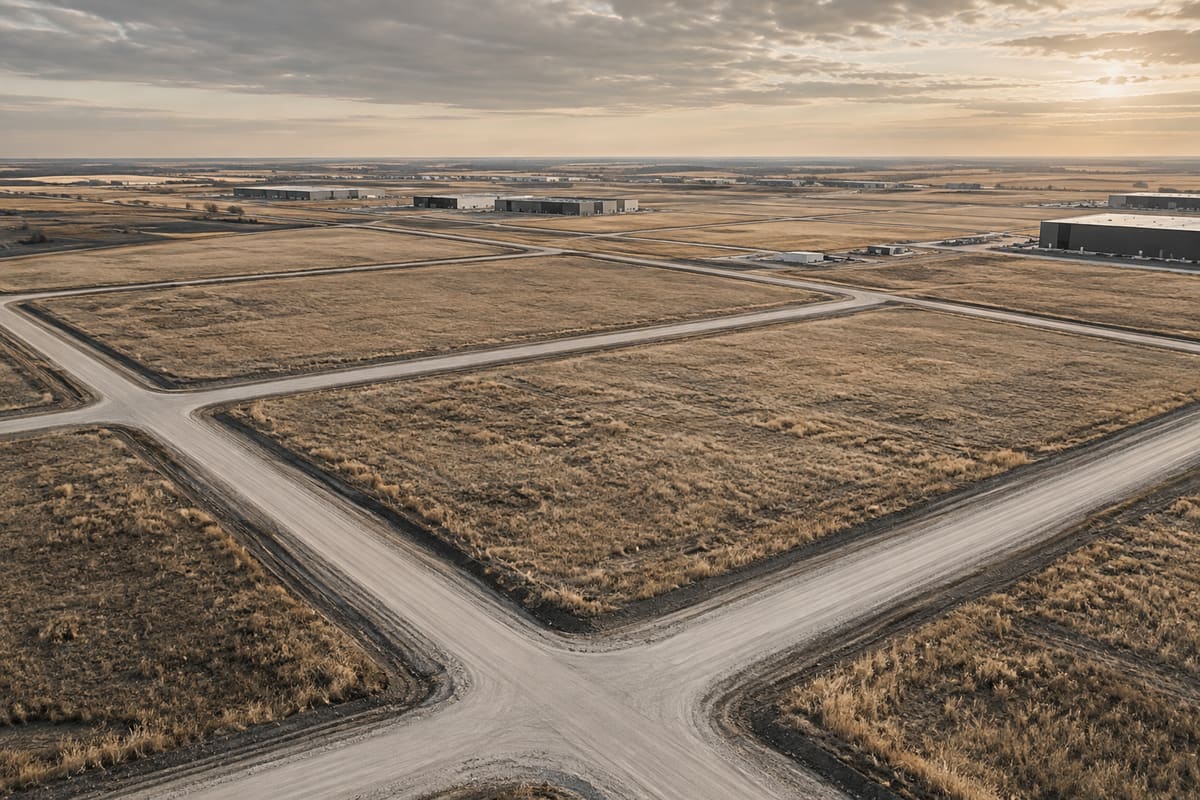
Renewable resource quality does not make a site deliverable. The development record must join exact parcel control with agricultural and environmental evidence, access, setbacks, neighbours, municipal participation, AUC Rule 007, grid connection, construction logistics, reclamation security and commercial terms. Each status should be traceable to a current source and a party authorized to rely on it.
This is general information, not legal, tax, environmental, engineering, accounting or investment advice. Obtain advice specific to the property and transaction.
1. Freeze the project and site definition
Record technology, initial and ultimate capacity, equipment envelope, collector system, substation, storage, transmission or distribution connection, access, laydown, operations, setbacks and schedule. Map every required parcel and third-party right.
A conceptual layout or land option does not establish final footprint, compliant setbacks, approved equipment, connection capacity or construction feasibility.
- Technology
- MW and phases
- Equipment
- Land control
- Connection
- Target schedule
2. Verify land control parcel by parcel
Review titles, plans, options, leases, easements, caveats, assignments, owner authority, mortgages, access, mineral and surface interests, existing energy facilities and competing rights with counsel and survey professionals.
Control of most project land does not cure a missing access, collector, substation or transmission parcel. Record executed, conditional, expired and proposed rights separately.
3. Apply current agricultural-land evidence
Identify current use, soil and land-suitability evidence, irrigation or irrigability, native grassland, drainage, agricultural productivity and the proposed co-existence approach. Use the current AUC and provincial requirements for the specific application.
Do not infer a land class or approval outcome from aerial imagery, municipal assessment or current crop. Alberta's agriculture-first requirements and AUC review are project-specific.
4. Rebuild municipal and AUC status
Track municipal consultation, planning and permit pathway, adjacent-owner and participant work, visual effects, glare or shadow-flicker evidence, noise, setbacks, Indigenous consultation where applicable, AUC filing and decision conditions.
A supportive council motion, development application, AUC application number or consultant report is not complete project approval. Rule 007 effective November 6, 2025 incorporates current information requirements across these topics.
5. Separate grid access from project approval
Identify the AESO or distribution pathway, market participant, studies, facility applications, agreements, security, construction, dependencies and current connection status. Match the power-plant layout and phases to the connection record.
Nearby transmission, a substation, a project-list entry or an AUC power-plant approval does not prove available capacity, constructed facilities, energized service or economic dispatch.
6. Control environment, water and construction evidence
Review wetlands, wildlife, native grassland, water, drainage, contamination, heritage, geotechnical conditions, roads, bridges, heavy haul, laydown, snow, fire response and emergency access with qualified professionals.
Public mapping and a referral record are screening inputs. They do not certify the buildable area, environmental acceptability or construction cost.
7. Verify registration, reclamation and security
Confirm the applicable EPEA registration path, conservation and reclamation plan, third-party cost estimate, security structure, timing, updates, approval conditions, closure and reclamation certification requirements.
Government-held and landowner-held security are not interchangeable evidence. A stated security amount is not proof it remains current, sufficient, available or compliant for the present project.
8. Price the complete development path
Model land payments, extensions, studies, consultation, municipal work, AUC process, grid contributions, roads, civil work, equipment, environmental measures, security, financing, tax, delay and failure scenarios. Preserve source and date for each material input.
A renewable project valuation or residual land scenario is not an appraisal, connection offer, approval decision or forecast of power prices and project returns.
9. Convert unresolved items into transaction controls
Tie deposits, extensions, access, assignment, conditions, closing and price to named evidence and decisions. Address study ownership, confidentiality, restoration after testing, failed approvals, partial land control and project transfer through counsel.
Commercially coordinates real-estate sourcing and transaction evidence. It does not approve generation, allocate grid capacity, engineer a project, determine environmental compliance or guarantee construction, energization or investment performance.
Primary sources
Verify the current rules.
Government and regulator pages can change. These links were reviewed on August 27, 2026.
Alberta Farmers' Advocate Office: Surface rights and renewable energy↗Alberta: Guidelines for renewable energy operations↗Alberta: Financial security for land reclamation↗Alberta: EPEA approvals and solar-wind registration↗Alberta: Renewable energy development on agricultural land↗Alberta: Summary of renewable-power policy changes↗AUC: Rule 007 — Facility Applications↗AUC: Facility application review process↗AUC Bulletin 2025-06: Reclamation security guidelines↗RECA: Real Estate Act Rules↗A real property decision?
Share the project, capacity, land, connection, municipality, approval tolerance and schedule. Commercially will coordinate the property search without promising approval or grid access.Who, how and why
Who: Commercially Research & Editorial.
How: Primary-source research and AI-assisted drafting were used to organize this guide around a practical commercial real estate decision. Source links, factual claims and material limitations were checked against Commercially's editorial standards on the review date.
Why: To help owners, buyers and tenants identify the records, questions and professional advice that belong in a real transaction work plan.
Editorial owner: Commercially Research & Editorial.
Commercial review: Slav Loban, Commercial Real Estate Division Leader.
Questions or corrections: hello@commercially.ca
Editorial review and correction standard →