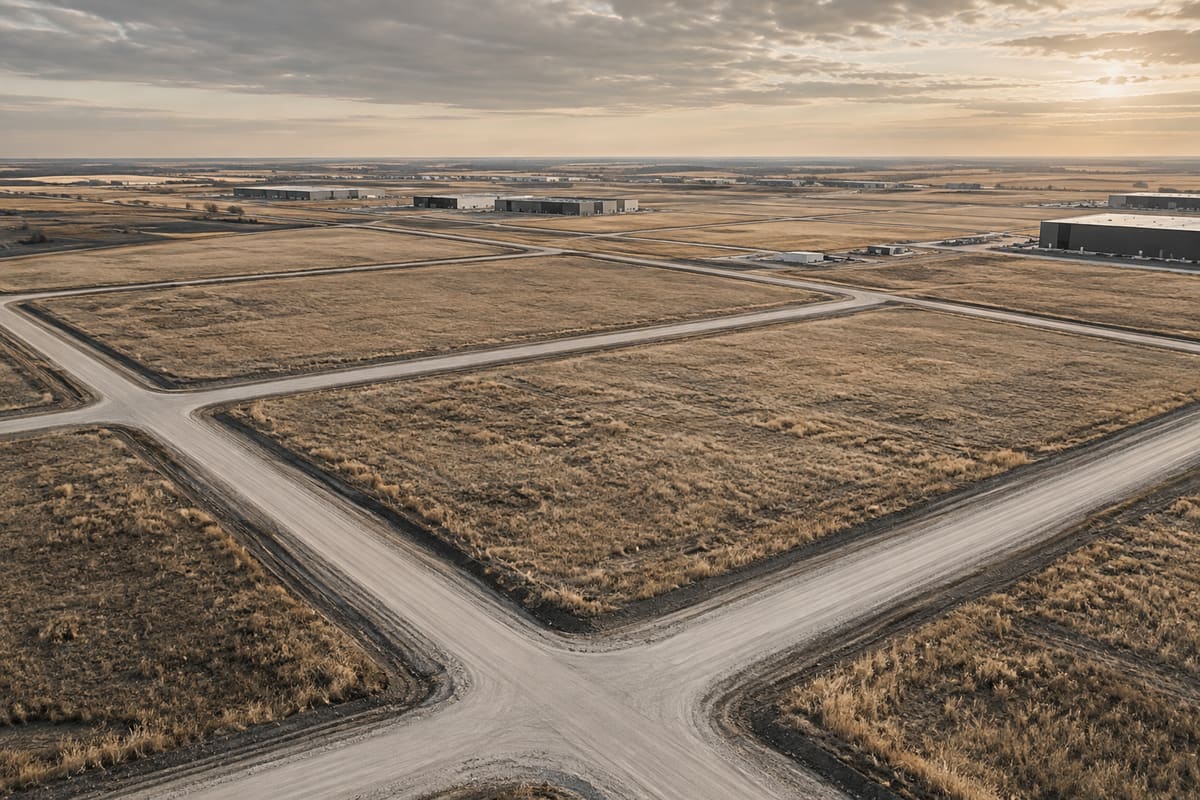
Development land should be priced against what is owned, what is currently permitted, what can be supported by evidence and what remains a future approval or construction risk. A listing's acreage, future-use label or nearby infrastructure does not establish a titled parcel, approved yield, legal access, utility capacity or deliverable project. The acquisition process should keep those conclusions separate from the first search through closing.
This is general information, not legal, tax, environmental, engineering, accounting or investment advice. Obtain advice specific to the property and transaction.
1. Define the development thesis before searching
State the intended use, target market, building or lot program, gross and net land requirement, access, utility demand, approval tolerance, capital, financing and timing. Separate essential closing facts from outcomes the buyer is prepared to pursue after closing.
Use Commercially's live land inventory to identify candidates, then apply the same written requirement to every parcel. A lower price per acre can conceal less developable area, longer approvals, missing services or a more expensive transportation obligation.
- Intended use and scale
- Required approvals
- Net developable area
- Servicing demand
- Capital and timing
- Exit or hold strategy
2. Establish every parcel and registered interest
Order current Alberta titles, registered plans and relevant instruments using the legal descriptions. Reconcile ownership, parcel area, mortgages, caveats, easements, utility rights, access agreements, restrictive interests and any assembly or retained-land requirement with counsel and an Alberta Land Surveyor where appropriate.
Alberta explains that a subdivision plan creates new parcels only after approval, survey and registration. Do not price a proposed lot, road or public-utility parcel as an existing separate title.
3. Read the planning hierarchy in order
Identify the applicable provincial regional plan, intermunicipal plan, municipal development plan, area structure or redevelopment plan, current land-use bylaw district and site-specific approvals. Cite the current document and map for each conclusion.
Policy direction, future growth, an owner concept, zoning, subdivision approval and development permission are different records. Confirm the exact pathway and decision authority with municipal planning professionals rather than treating supportive policy as entitlement.
4. Test subdivision and approval status
Determine whether the intended parcel configuration already exists or requires subdivision, consolidation, reserve dedication, road closure, redistricting, a new plan or plan amendment. Review applications, circulation comments, decisions, conditions, appeals, agreements, expiry dates and registration status.
Alberta's appeal framework assigns most matters to local Subdivision and Development Appeal Boards, while identified provincial-interest matters can go to the Land and Property Rights Tribunal. An issued decision may still be conditional, appealable or unregistered.
5. Verify access and transportation delivery
Distinguish legal access, constructed access, temporary access and proposed access. Review frontage, road authority, approach permits, intersection capacity, road widening, traffic studies, rail crossings, shared roads and the cost and timing of required improvements.
Alberta requires provincial approval for new or changed development within its highway development-control zones and evaluates access and setbacks. Highway visibility or frontage does not itself create direct access.
6. Prove utilities and servicing capacity
For water, sanitary, stormwater, power, gas and telecommunications, identify the provider, connection point, installed infrastructure, available or allocated capacity, easements, extension requirements, approvals, timing and cost. Obtain current provider or municipal evidence tied to the actual project demand.
A utility line near a parcel does not prove connection permission or capacity. Separate off-site work, on-site civil work, oversizing, cost sharing, development-agreement obligations and security requirements in the project budget.
7. Investigate physical and environmental constraints
Coordinate survey, topography, geotechnical, drainage, wetlands, water bodies, flood, fill, contamination, pipelines, wells, utilities, heritage and adjacent-use work. Search the Environmental Records Viewer and relevant regulator systems by parcel and surrounding area, then let qualified professionals set the investigation scope.
AER Directive 079 supports subdivision and development requirements for identifying and addressing abandoned wells. Public mapping and an empty database search remain screening evidence, not site clearance or a verified building envelope.
8. Rebuild the development cost and schedule
Model land price, acquisition and financing costs, planning, subdivision, studies, design, levies, reserves, roads, utilities, earthworks, environmental work, permits, taxes, carrying cost and contingency as separate dated inputs. Preserve the source and effective date for each amount.
Use scenarios for density, absorption, construction timing and cost escalation. A residual land calculation is sensitive to small changes and is not a substitute for a qualified appraisal, engineering estimate, legal review or lender underwriting.
9. Write conditions around evidence and decisions
Coordinate title, planning, subdivision, access, servicing, environment, geotechnical, financing, market and internal-approval conditions with counsel. Define deliverables, entry rights, testing, restoration, application authority, deadlines, notices and the evidence required for satisfaction or waiver.
Do not waive a condition merely because an application is possible. Identify whether the acquisition depends on information, a professional conclusion, municipal support, a formal approval, registration or completed infrastructure.
10. Close the land actually approved for purchase
Before closing, refresh title and corporate authority, reconcile legal descriptions and area, confirm required discharges, agreements, access, occupants, taxes, GST treatment, deposits and assignment of reports or approvals. Phase or takedown structures require parcel-by-parcel closing logic.
This guide is educational and is not legal, tax, planning, subdivision, engineering, environmental, appraisal, financing or investment advice. Qualified professionals and the responsible authorities control property-specific conclusions.
Primary sources
Verify the current rules.
Government and regulator pages can change. These links were reviewed on August 26, 2026.
Alberta: Municipal planning and development documents↗Alberta: Land-use Framework↗Alberta: Subdivision and development appeals↗Alberta: Find land titles, documents or plans↗Alberta: Register a land title document or plan↗Alberta: Roadside development permits↗Alberta: Environmental Records Viewer↗Alberta: Water Act and EPEA authorizations↗AER: Directive 079—surface development near abandoned wells↗Alberta: Wetland Policy implementation↗A real property decision?
Share the market, intended use, land area, access, servicing, approval tolerance, capital and timing.Who, how and why
Who: Commercially Research & Editorial.
How: Primary-source research and AI-assisted drafting were used to organize this guide around a practical commercial real estate decision. Source links, factual claims and material limitations were checked against Commercially's editorial standards on the review date.
Why: To help owners, buyers and tenants identify the records, questions and professional advice that belong in a real transaction work plan.
Editorial owner: Commercially Research & Editorial.
Commercial review: Slav Loban, Commercial Real Estate Division Leader.
Questions or corrections: hello@commercially.ca
Editorial review and correction standard →