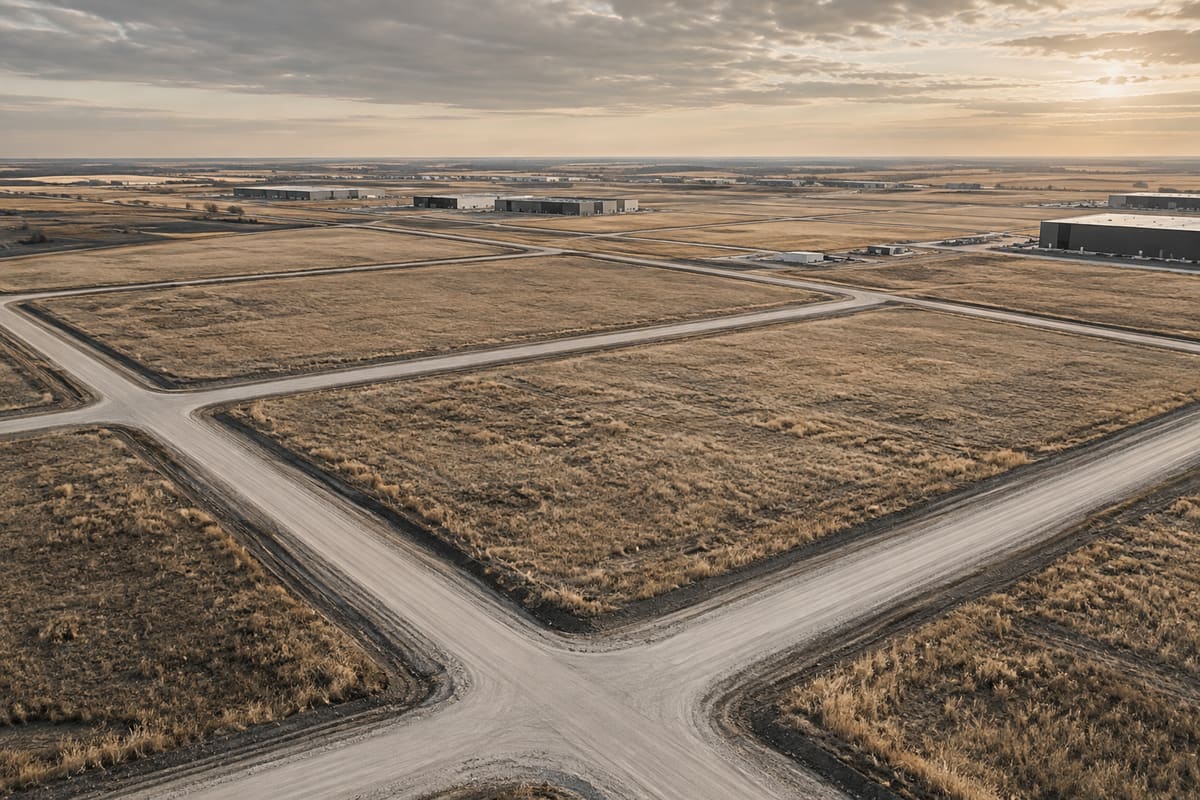
Development-land value depends on the property interest, effective date, current legal and physical state, reasonably probable use, net developable area, access, servicing, environment, approval path, timing, cost and market evidence. A per-acre asking price, municipal assessment or proposed concept cannot resolve those questions. Owners should prepare the parcel evidence while keeping brokerage analysis, feasibility scenarios and formal appraisal conclusions distinct.
This is general information, not legal, tax, environmental, engineering, accounting or investment advice. Obtain advice specific to the property and transaction.
1. Define the valuation assignment
Identify every title and parcel, interest, effective date, purpose, intended users and whether leases, buildings, resource rights, equipment or other assets are included. An assembled holding, partial interest, option, leased land and fee-simple parcel are different assignments.
CUSPAP 2026 governs AIC members' professional assignments from April 1, 2026. Commercially may prepare brokerage positioning and competition analysis for a potential mandate, but it does not present that work as a formal appraisal.
- Parcels and interest
- Effective date
- Purpose and users
- Included rights
- Current state
- Professional scope
2. Separate appraisal, assessment, feasibility and price
A formal appraisal develops an assignment-specific opinion under professional standards. Municipal assessment is annual mass appraisal for allocating property tax. Feasibility tests a defined project and assumptions. Brokerage analysis supports marketing, asking price is strategy, and sale price is one transaction outcome.
Calgary states that non-residential vacant land assessment uses sales comparison, while Edmonton publishes separate commercial, industrial and development-land assessment methodologies. Those municipal models are not transaction-specific appraisals of a subject parcel.
3. Establish current and reasonably probable use
Analyze what is legally permissible, physically possible, financially feasible and maximally productive as of the effective date. Verify current policy, district, overlays, approvals and constraints and support the probability and timing of any assumed change.
A concept plan, nearby project, council discussion or application does not prove rezoning, subdivision or development approval. Highest and best use is an appraisal conclusion, not a synonym for the owner's preferred development.
4. Reconcile gross, net and developable area
Start with titled area, then map roads, reserves, environmental features, water bodies, setbacks, easements, rights of way, topography, drainage, access, utilities and other constraints. Preserve scenario-specific net and developable area calculations.
Price per gross acre, net acre, developable acre, buildable square foot and serviced lot answer different questions. Every unit of comparison needs a defined denominator and property state.
5. Verify access, servicing and infrastructure obligations
Document legal access, highway or municipal authority, roads, water, fire flow, wastewater, stormwater, power, gas and telecommunications by existing location, capacity, connection, approval, cost and delivery time.
Nearby or planned infrastructure does not prove available capacity or a right to connect. Include off-site levies, development agreements, oversizing, security, dedications and external project dependencies where supported.
6. Use completed land transactions carefully
Compare completed sales with similar location, policy, zoning, approval state, parcel size, net area, access, services, environment, timing and transaction terms. Verify whether assemblies, vendor financing, options, buildings, leases or other rights affected the price.
Active listings are competition, not completed comparable evidence. A per-acre rate cannot be transferred from serviced approved land to unserviced or speculative land without supportable adjustments.
7. Use residual analysis as a transparent scenario
Where a development scenario is relevant, support gross development value, absorption, costs, financing, timing, profit or required return, approvals and land cash flows. Test alternative use, density, cost and schedule cases.
Residual land value is highly sensitive and is not automatically market value. A development pro forma, lender model or online calculator cannot substitute for an appraisal or verified market evidence.
8. Reconcile holding cost, environment and time
Include taxes, financing, insurance, security, maintenance, professional work, applications, appeals, remediation, infrastructure, demolition and opportunity cost across realistic timelines. Preserve qualified environmental and engineering findings and their reliance limits.
An old Phase I, clean map search, approved concept or owner budget is not environmental clearance, construction authorization or a fixed delivery date.
9. Distinguish assemblage and partial-interest effects
For multiple parcels, identify common and separate ownership, control, access, servicing and approvals. Analyze the property as currently controlled before considering a larger assemblage or subdivision scenario.
The combined value of an assembly is not automatically allocated by acreage, and a holdout, option or partial interest does not automatically command a premium. Legal rights, probability, cost and market behaviour require evidence.
10. Use the result for the correct owner decision
Use formal appraisal where reliance is required, assessment review for tax, brokerage analysis for positioning and internal scenarios for strategy. State assumptions and effective dates and refresh the evidence when approvals, servicing, costs or the market change.
Commercially can organize a land review, live competition, positioning and sale mandate. It does not certify market value, assessment correctness, planning outcome, net developable area, environment, servicing, financing or tax treatment.
Primary sources
Verify the current rules.
Government and regulator pages can change. These links were reviewed on August 27, 2026.
Appraisal Institute of Canada: CUSPAP 2026↗Appraisal Institute of Canada: Highest and best use↗Appraisal Institute of Canada: Zoning and land-use controls↗Alberta: Municipal property assessment↗Calgary: Land and specialized property assessments↗Edmonton: 2026 assessment reference materials↗RECA: Real Estate Act Rules↗Alberta: Find land titles, documents or plans↗Alberta: Subdivision and development appeals↗Alberta: Roadside development permits↗Alberta: Environmental Site Assessment Repository↗CRA: Commercial real property—sales and rentals↗A real property decision?
Share the Alberta parcels, current approvals, services, owner objective and available evidence. The first review is brokerage strategy, not an appraisal.Who, how and why
Who: Commercially Research & Editorial.
How: Primary-source research and AI-assisted drafting were used to organize this guide around a practical commercial real estate decision. Source links, factual claims and material limitations were checked against Commercially's editorial standards on the review date.
Why: To help owners, buyers and tenants identify the records, questions and professional advice that belong in a real transaction work plan.
Editorial owner: Commercially Research & Editorial.
Commercial review: Slav Loban, Commercial Real Estate Division Leader.
Questions or corrections: hello@commercially.ca
Editorial review and correction standard →