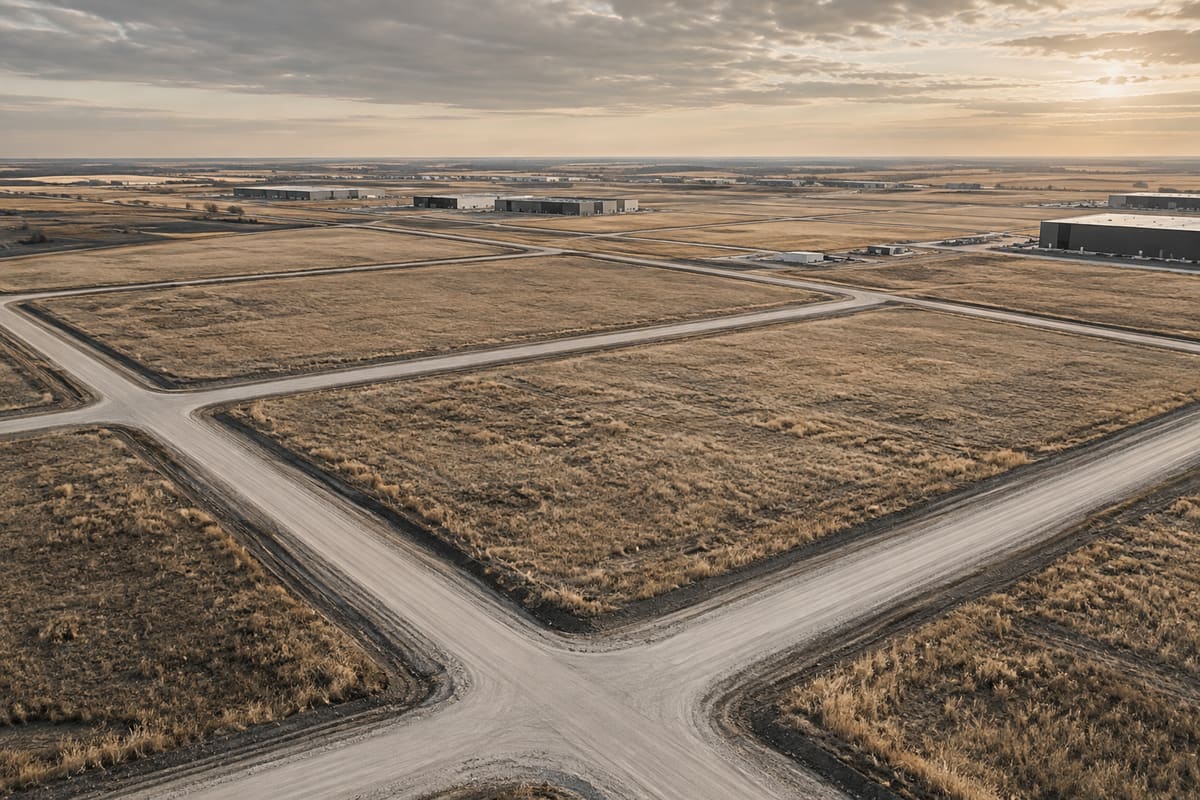
Development land is not sold on acreage and future-use language alone. Buyers test the legal parcels, policy context, current land-use designation, access, servicing, topography, environment, existing approvals, development costs and time required to pursue an outcome. Owners improve price discovery and closing certainty when those inputs are sourced without presenting unapproved potential as entitlement.
This is general information, not legal, tax, environmental, engineering, accounting or investment advice. Obtain advice specific to the property and transaction.
1. Define ownership, authority and the sale perimeter
Confirm the registered and beneficial owner, signing authority, internal approvals and any lender, partner, estate, court or corporate requirements. Order current Alberta titles and have counsel review registered interests, legal parcels and rights that may affect disposition.
Define which parcels, improvements, water interests, access rights, leases, licences, studies, applications and other materials are included. Set owner priorities across price, certainty, confidentiality, timing, retained land, phased closing and post-closing obligations.
- Ownership and authority
- Legal parcels
- Included rights and records
- Retained land
- Timing and phasing
- Price and certainty
2. Establish the title and boundary record
Match title, legal plans, surveys, municipal records and observed occupation. Organize easements, rights of way, caveats, utility corridors, access agreements, leases, encroachments and other instruments for legal review.
State the source and date for gross area, net area and any excluded or constrained land. Do not use a marketing acreage as the only basis for price-per-acre analysis or development yield.
3. Separate policy, designation, zoning and approval
Identify applicable provincial regional plans, intermunicipal plans, municipal development plans, area structure or redevelopment plans, land-use bylaw designation and site-specific approvals. Record the document, adoption date, map and policy section supporting each statement.
A policy direction, future-growth area or proposed concept is not the same as current zoning, subdivision approval or development permission. Municipal and planning professionals should confirm the governing hierarchy and site-specific pathway.
4. Build the access and transportation record
Document legal and physical access, road classification, frontage, intersections, approaches, rail crossings, shared roads and any provincial or municipal permits or studies. Identify whether access is existing, temporary, conceptual or subject to approval.
Future intersection, signal, road widening or access claims should remain qualified until the responsible authority confirms them. Transportation engineers and the authority having jurisdiction should address capacity, geometry and approval requirements.
5. Verify servicing evidence
Organize available water, sanitary, storm, power, gas and telecom information, including utility correspondence, capacities, locations, easements, studies and cost estimates. State the date, source, assumptions and area served.
A nearby line does not prove available capacity, connection permission, timing or cost. Distinguish existing service, allocated capacity, planned infrastructure, owner estimate and professionally supported concept.
6. Identify physical and environmental constraints
Compile topography, geotechnical, drainage, wetlands, water bodies, flood, contamination, fill, pipelines, wells, utilities, slopes, vegetation, heritage and adjacent-use information. Search applicable provincial environmental and authorization records using the correct parcels and surrounding area.
Public records and mapping are screening inputs, not site clearance. Qualified environmental, geotechnical, civil, survey and other professionals should define property-specific investigations and development implications.
7. Present approvals and studies with their status
Index concepts, applications, plans, reports, municipal comments, decisions, conditions, appeals, agreements and expiry dates. State whether each item is draft, submitted, approved, conditional, appealed, expired or superseded.
Do not market a concept plan as an approved yield or imply that a prior study guarantees a future decision. Identify the client, author, date, scope, reliance limits and changes since completion.
8. Frame value without capitalizing certainty that does not exist
Pricing evidence can consider current permitted use, comparable land, location, planning path, servicing, constraints, holding time and development costs. Keep verified transactions, listings, owner expectations and residual-development scenarios separate.
Municipal assessment, asking price, brokerage analysis and appraisal serve different purposes. If an appraisal is required, retain an appropriately qualified appraiser for the defined property interest, purpose and effective date.
9. Choose the buyer process and compare execution
Define the likely buyer universe, confidentiality, data-room stages, site access, questions and offer requirements. Compare price with deposit, purchaser authority, equity, financing, planning and diligence conditions, study access, extensions, assignments, phasing, closing and post-closing obligations.
Applicable FINTRAC requirements include client identification, beneficial-ownership and recordkeeping obligations. Brokerage compliance is separate from the owner's commercial assessment of a developer's capital, approvals strategy and execution path.
10. Coordinate tax, closing and retained obligations
CRA guidance states that sales of commercial real property are generally taxable unless a specific exemption applies. Agricultural, mixed-use, individual, trust and business circumstances can require distinct advice.
Plan title, discharges, access, leases, crops or occupants, studies, applications, deposits, adjustments, phased parcels, environmental obligations and post-closing cooperation. This guide is educational and is not legal, tax, planning, engineering, environmental, appraisal or accounting advice.
Primary sources
Verify the current rules.
Government and regulator pages can change. These links were reviewed on August 26, 2026.
Alberta: Find land titles documents and plans↗Alberta: Municipal planning and development documents↗Alberta: Land-use planning↗Alberta: Environmental Records Viewer↗Alberta: Water Act and EPEA authorizations↗CRA: Commercial real property—sales and rentals↗FINTRAC: Real estate sector requirements↗RECA: Real Estate Act Rules and standards of practice↗A real property decision?
Share the parcels, planning status, servicing evidence, timing and owner priorities.Who, how and why
Who: Commercially Research & Editorial.
How: Primary-source research and AI-assisted drafting were used to organize this guide around a practical commercial real estate decision. Source links, factual claims and material limitations were checked against Commercially's editorial standards on the review date.
Why: To help owners, buyers and tenants identify the records, questions and professional advice that belong in a real transaction work plan.
Editorial owner: Commercially Research & Editorial.
Commercial review: Slav Loban, Commercial Real Estate Division Leader.
Questions or corrections: hello@commercially.ca
Editorial review and correction standard →