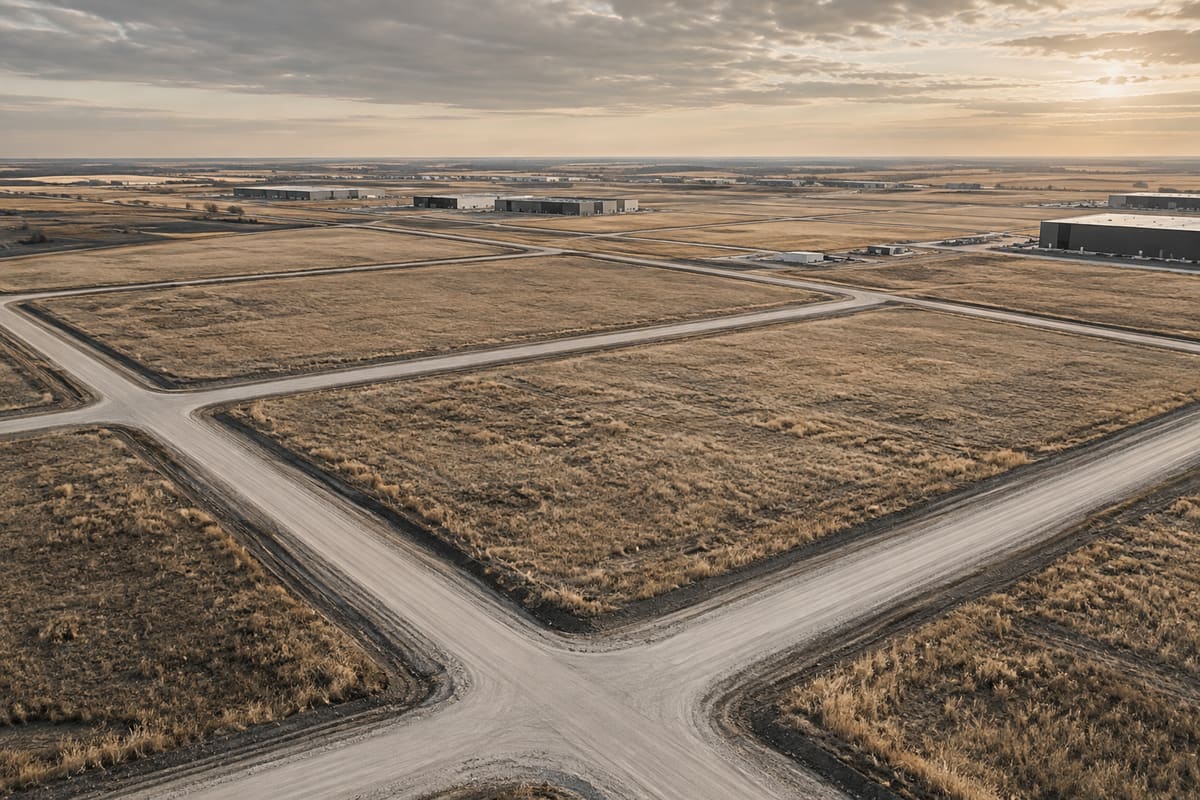
Vacant land is not automatically GST-free and it is not automatically taxable merely because a listing calls it commercial. The result depends on the seller, ownership and use history, business or adventure facts, subdivisions, exemptions, buyer registration and transaction structure. The parties need a written tax position before the offer assigns collection, self-assessment and indemnity risk.
This is general information, not legal, tax, environmental, engineering, accounting or investment advice. Obtain advice specific to the property and transaction.
1. Identify the seller and beneficial owner
Confirm whether the seller is an individual, personal trust, corporation, partnership, estate, charity, public-service body or non-resident and reconcile legal and beneficial ownership. Determine GST registration and reporting history.
An individual's possible vacant-land exemptions do not extend automatically to a corporation, partnership or trust.
- Legal seller
- Beneficial owner
- Entity type
- GST registration
- Residency
- Related parties
2. Reconstruct land use and acquisition intent
Document purchase purpose, personal use, farming, leasing, storage, parking, resource use, development work, servicing, subdivision, advertising and prior sales. CRA's vacant-land guidance applies fact-specific exemptions and exceptions.
Zoning, assessment class and an undeveloped appearance do not determine whether the sale occurs in a commercial activity or an adventure in the nature of trade.
3. Build the subdivision and severance record
Collect plans, applications, approvals, titles, consolidations, prior severances and sales. CRA's individual-vendor guidance contains specific subdivision exceptions and related-person rules.
Do not generalize one example to a multi-parcel development, inherited land, partnership, repeated sale program or corporation.
4. Start from taxable unless a specific exemption fits
CRA's commercial-real-property memorandum states that a sale of real property is generally a taxable commercial activity unless specifically exempted. Most exemptions are transaction- and seller-specific.
Have the tax advisor identify the exact Excise Tax Act provision and facts. A contract label stating exempt or plus GST does not create the legal result.
5. Decide who collects or self-assesses
CRA says a seller of taxable land generally collects GST unless the taxable land is sold to a GST/HST registrant required to remit directly. Registered purchasers may report self-assessed tax through the applicable return when requirements are met.
Obtain and verify registration, legal name and effective date with counsel and the tax advisor. A business number supplied in an email is not enough for closing reliance.
6. Do not overextend the GST44 election
CRA says the GST44 election concerns acquisition of a business or part of a business where all or substantially all of the property needed to carry it on is acquired and other conditions are met.
A sale of vacant land alone is not automatically a sale of a business. The election also has exceptions, filing requirements and consequences that advisors must confirm.
7. Coordinate input tax credits and mixed use
Buyer GST registration does not by itself establish full input tax-credit recovery. Intended commercial use, exempt activities, entity, improvements and changes in use affect the analysis.
Model cash needed if tax must be remitted before an input tax credit is available or if recovery is partial, denied or delayed.
8. Put the tax position into closing evidence
The agreement should address price, GST wording, seller collection, purchaser self-assessment, registration evidence, elections, representations, indemnity, adjustments and filing responsibility with counsel. Preserve the written advisor conclusion and final returns.
Commercially coordinates licensed commercial-property brokerage, sale and replacement-search timing, market evidence and transaction communication. It does not provide Canadian or U.S. tax, accounting or legal advice; determine tax character, eligibility, elections, reserves, GST liability or input tax credits; hold exchange funds; or act as a qualified intermediary.
Primary sources
Verify the current rules.
Government and regulator pages can change. These links were reviewed on August 27, 2026.
CRA: Commercial Real Property — Sales and Rentals↗CRA: Sales of Vacant Land by Individuals↗CRA: GST/HST in special cases — sales of vacant land↗CRA: Liability for Tax↗CRA: Sale of a Business or Part of a Business↗CRA: Form GST44 — Acquisition of a Business Election↗Justice Laws: Income Tax Act, section 44↗CRA: Replacement Property — Income Tax Folio S3-F3-C1↗A real property decision?
Share the parcels, ownership, use history and timing. Commercially handles the property mandate while your accountant and counsel determine and document GST treatment.Who, how and why
Who: Commercially Research & Editorial.
How: Primary-source research and AI-assisted drafting were used to organize this guide around a practical commercial real estate decision. Source links, factual claims and material limitations were checked against Commercially's editorial standards on the review date.
Why: To help owners, buyers and tenants identify the records, questions and professional advice that belong in a real transaction work plan.
Editorial owner: Commercially Research & Editorial.
Commercial review: Slav Loban, Commercial Real Estate Division Leader.
Questions or corrections: hello@commercially.ca
Editorial review and correction standard →