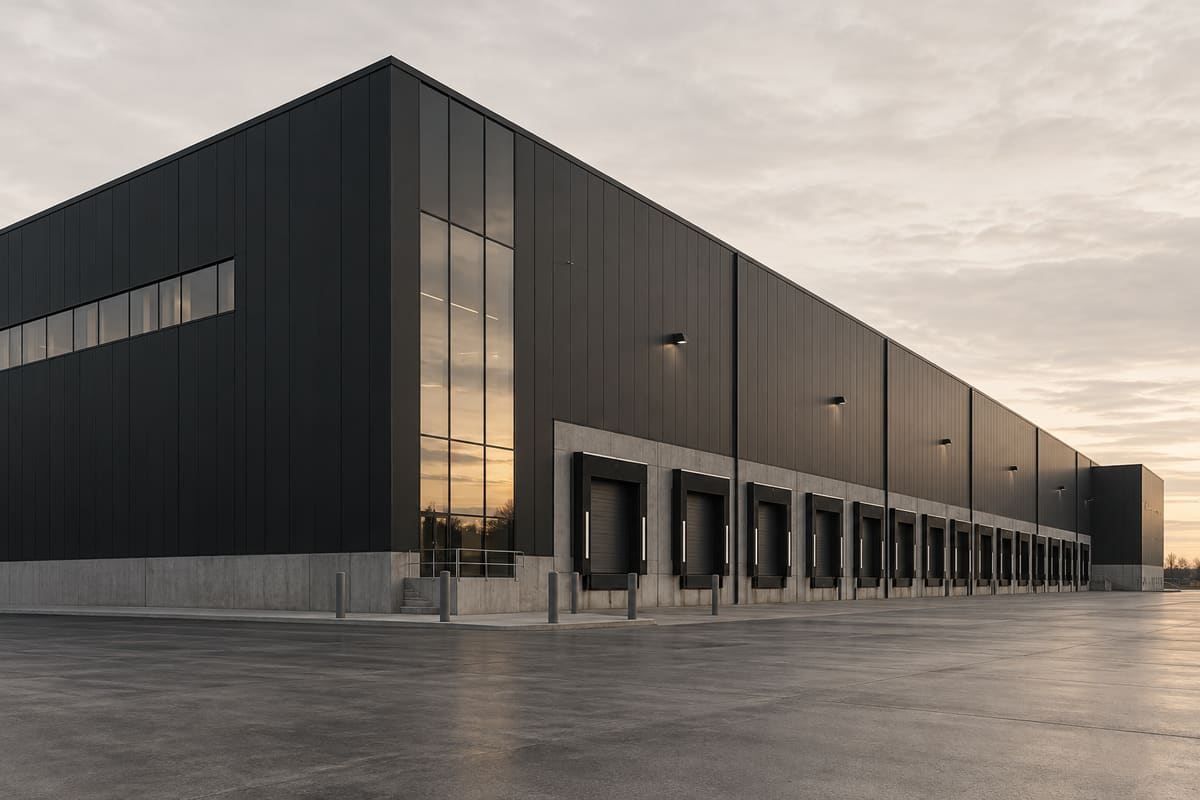
Industrial property value depends on the real-property interest, effective date, purpose, land and building utility, legal use, environmental record, occupancy, income and the evidence available. An assessed value, price per square foot or online estimate cannot resolve those questions. This guide shows how owners can prepare the industrial evidence while keeping brokerage analysis separate from a formal appraisal.
This is general information, not legal, tax, environmental, engineering, accounting or investment advice. Obtain advice specific to the property and transaction.
1. Define the valuation assignment
Identify the property, titled parcels, interest, effective date, purpose, intended users and whether equipment, fixtures, business assets or leases are included. A fee-simple owner-user property, a leased investment and a leasehold interest are different assignments.
CUSPAP 2026 applies to AIC members completing professional-services assignments from April 1, 2026. Commercially may provide a brokerage market and positioning analysis for a potential mandate, but it does not provide or label that work as a formal appraisal.
- Property and interest
- Effective date
- Purpose and users
- Included assets
- Assumptions
- Required professional scope
2. Separate appraisal, assessment, market analysis and price
A formal appraisal develops a defined professional opinion under applicable standards. Municipal assessment is annual mass appraisal for allocating property tax. Brokerage analysis informs marketing and negotiation. Asking price is an owner strategy, and sale price is one transaction outcome.
Do not use one as automatic proof of another. Alberta explains that assessment distributes the tax burden, while CUSPAP requires assignment-specific property, market and highest-and-best-use analysis for appraisal conclusions.
3. Establish highest and best use
Analyze what is legally permissible, physically possible, financially feasible and maximally productive as of the effective date. Consider the land as if vacant and the property as improved where the assignment requires it.
Existing industrial operation, a development concept or nearby redevelopment does not prove the supportable use. Current land-use controls, approvals, access, servicing, environmental constraints, adaptability, cost, timing and market demand require evidence.
4. Build the land and site utility record
Reconcile title, legal description, site area, shape, access, frontage, yard, parking, loading, rail, easements, utilities, drainage, outdoor storage and expansion area. Identify shared or licensed areas separately from titled ownership.
Land value cannot be inferred only from gross acres or neighbouring asking prices. Net usable area, servicing, access, environmental history, planning status and transaction terms can materially change comparison.
5. Normalize the industrial building specifications
Source building and office area, age, quality, condition, clear height, bay spacing, floor, doors, docks, grade loading, cranes, power, ventilation, fire protection and site coverage. State measurement conventions and evidence dates.
Edmonton's 2026 warehouse assessment methodology illustrates that industrial models can consider variables such as building size, condition and wall height. A municipal model variable is not a transaction-specific adjustment or appraisal conclusion for the subject.
6. Use direct comparison with verified transactions
Compare completed transactions that compete with the subject and adjust for time, location, land, building utility, occupancy, condition, environmental evidence, financing, included assets and terms. Separate sale evidence from active listings and rumours.
Price per square foot is a unit of comparison, not a valuation method by itself. Confirm the denominator, land contribution, office ratio, excess land, transaction perimeter and whether the sale included business or equipment value.
7. Build the income approach from supportable rent and costs
For leased or leaseable property, reconcile executed leases, market-rent evidence, area, vacancy, credit loss, recoveries, operating expenses, management, reserves, downtime, tenant improvements and leasing costs. Keep contract, actual, market and stabilized cases distinct.
CUSPAP 2026 includes professional requirements for market-rent assignments. An advertised rent, unsigned proposal or owner target is not market rent, and a selected capitalization rate cannot repair unsupported NOI.
8. Use cost evidence without equating cost to value
For newer, specialized or thinly traded properties, land plus replacement or reproduction cost less physical deterioration and functional or external obsolescence may be relevant. Match the scope and date of cost evidence to the actual improvements.
Historic cost, insurance replacement cost, book value and current construction budget serve different purposes. Specialized improvements may cost more than market participants are willing to recognize if the buyer pool cannot use them.
9. Reconcile environmental, legal and capital effects
Identify known contamination, investigation, remediation, risk management, building condition, immediate repairs, code work, title constraints and lease obligations. Qualified professionals should determine scope and conclusions; the valuation team then considers supported market effects within its mandate.
An empty environmental search, old Phase I, operating permit, reserve budget or contractor quote is not a clean-property or value conclusion. Preserve unresolved matters and any extraordinary assumptions visibly.
10. Convert the evidence into the right owner decision
Use the output appropriate to the purpose: formal appraisal for authorized reliance, assessment review for tax, brokerage analysis for positioning, or internal scenarios for strategy. Record effective dates and update material evidence before acting.
Commercially can organize an industrial property review, live competition, positioning and sale or lease mandate. It does not certify market value, assessment correctness, environmental condition, legal use, building condition, financing or tax treatment.
Primary sources
Verify the current rules.
Government and regulator pages can change. These links were reviewed on August 26, 2026.
Appraisal Institute of Canada: CUSPAP 2026↗Appraisal Institute of Canada: Highest and best use↗Alberta: Municipal property assessment↗Calgary: Industrial property assessments↗Edmonton: 2026 industrial warehouse assessment methodology↗RECA: Real Estate Act Rules↗Alberta: Find land titles, documents or plans↗Alberta: Building codes and standards↗Alberta: Fire codes and standards↗Alberta: Contaminated-site remediation↗CRA: Commercial real property—sales and rentals↗A real property decision?
Share the Alberta property, occupancy, owner objective and available evidence. The first review is a brokerage strategy discussion, not an appraisal.Who, how and why
Who: Commercially Research & Editorial.
How: Primary-source research and AI-assisted drafting were used to organize this guide around a practical commercial real estate decision. Source links, factual claims and material limitations were checked against Commercially's editorial standards on the review date.
Why: To help owners, buyers and tenants identify the records, questions and professional advice that belong in a real transaction work plan.
Editorial owner: Commercially Research & Editorial.
Commercial review: Slav Loban, Commercial Real Estate Division Leader.
Questions or corrections: hello@commercially.ca
Editorial review and correction standard →