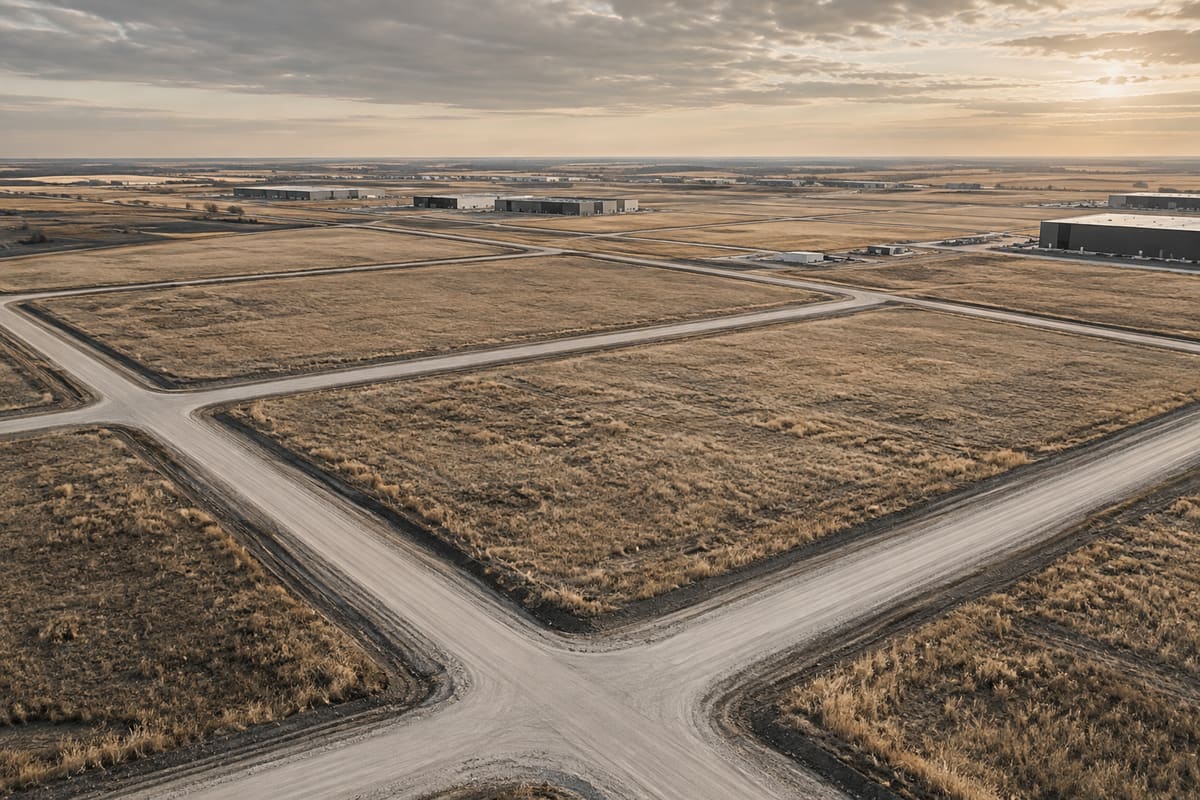
Early-stage land can be marketable, but the buyer pool, price and conditions depend on exactly what is controlled and what remains uncertain. A credible offering states current title, policy, zoning, access, services, environment, applications and studies without turning proximity, potential or a pending process into approved or serviced fact.
This is general information, not legal, tax, environmental, engineering, accounting or investment advice. Obtain advice specific to the property and transaction.
1. Define the land and current status precisely
Identify every title, parcel, owner, option, lease, legal area and included right. Use dated status labels for policy, zoning, subdivision, development permit, servicing, agreements, appeals and registration.
Unapproved can mean many things. Do not use development-ready, approved, serviced or shovel-ready unless the exact permissions, infrastructure and outstanding conditions support the claim.
- Title and control
- Current policy
- Current district
- Applications
- Services
- Outstanding decisions
2. Reconcile title, boundaries and legal access
Organize current titles, registered plans, easements, rights of way, caveats, access instruments, road plans and observed boundaries. Identify encroachments, occupations and shared or informal access for professional review.
Road frontage, a trail or neighbouring permission does not establish legal and commercially adequate access. Provincial-highway control can create a separate approval path.
3. Show planning evidence without selling the forecast
Provide effective statutory plans, current district, municipal correspondence, applications, studies, notices, decisions, conditions and appeal status. Separate owner concepts and consultant scenarios from adopted bylaws and final decisions.
Policy support, a submitted application, first reading, an administration recommendation or a concept plan is not rezoning, subdivision or development approval.
4. Build a service-by-service evidence matrix
For roads, water, fire flow, wastewater, stormwater, power, gas and telecom, state existing location, owner, known capacity work, connection, easement, application, cost source, timing and unresolved question.
Utilities nearby, at the boundary or shown on a concept plan do not prove capacity, funding or a right to connect. Keep installed, available, allocated, planned and conceptual infrastructure distinct.
5. Organize environmental and physical constraints
Map topography, drainage, water bodies, wetlands, historic uses, tanks, spills, pipelines, wells, setbacks, geotechnical conditions and neighbouring constraints. Index qualified reports by client, date, parcel, scope and reliance.
A public-record search or old report is not environmental clearance, and gross acres are not automatically developable acres.
6. Decide which pre-sale work is worth funding
Compare selling in current condition with targeted title, survey, planning, servicing, environment or engineering work. Test whether each item clarifies a material risk, broadens the buyer pool or only advances one buyer-dependent concept.
Use budgets and written decision gates. A costly study may not be transferable or reliable for another project, lender or purchaser.
7. Position scenarios with disciplined language
Show current facts first, then clearly labelled scenarios with source, author, date, assumptions and unapproved status. Identify likely user, developer, investor, neighbouring-owner and long-hold audiences from evidence rather than hype.
Do not state future density, lot yield, value, servicing date or development timeline as fact. The municipality, regulators, utilities, professionals, lender and buyer control their respective decisions.
8. Build a controlled early-stage data room
Include title, plans, tax, leases, policy, zoning, applications, servicing correspondence, studies, environmental records, invoices and owner disclosures with a source and version index. Preserve missing records and contradictions.
State report reliance and authorization. An NDA does not create buyer reliance on a seller-commissioned report or authorize a buyer to apply in the owner's name.
9. Compare development-land offers by complete economics
Compare headline price with deposit, conditions, diligence access, planning authority, extensions, outside date, option or takedown structure, vendor financing, adjustments, representations, closing and buyer capability.
A higher conditional price can be weaker after time, control, carrying cost and execution risk. Counsel should define remedies, releases and owner obligations.
10. Preserve facts through closing
Update approvals, applications, costs and reports during marketing. At closing, coordinate title, discharges, documents, assignments, taxes, access, studies, applications, deposits, keys and possession under the agreement.
Commercially can execute a controlled land disposition. It does not certify title, net area, environment, servicing, planning outcome, development feasibility, market value, tax or buyer financing.
Primary sources
Verify the current rules.
Government and regulator pages can change. These links were reviewed on August 27, 2026.
RECA: Real Estate Act Rules↗Alberta: Find land titles, documents or plans↗Alberta: Subdivision and development appeals↗Alberta: Roadside development permits↗Alberta: Environmental Site Assessment Repository↗CRA: Commercial real property—sales and rentals↗Appraisal Institute of Canada: CUSPAP 2026↗Appraisal Institute of Canada: Highest and best use↗Appraisal Institute of Canada: Zoning and land-use controls↗Alberta: Municipal property assessment↗Calgary: Land and specialized property assessments↗Edmonton: 2026 assessment reference materials↗A real property decision?
Share the Alberta parcels, current planning, known services, studies and owner timing. No public listing is created by the inquiry.Who, how and why
Who: Commercially Research & Editorial.
How: Primary-source research and AI-assisted drafting were used to organize this guide around a practical commercial real estate decision. Source links, factual claims and material limitations were checked against Commercially's editorial standards on the review date.
Why: To help owners, buyers and tenants identify the records, questions and professional advice that belong in a real transaction work plan.
Editorial owner: Commercially Research & Editorial.
Commercial review: Slav Loban, Commercial Real Estate Division Leader.
Questions or corrections: hello@commercially.ca
Editorial review and correction standard →